

Discover 6 practical spa appointment scheduling tips to boost client satisfaction, reduce admin tasks, and improve your wellness business’s efficiency.
6 Essential Spa Appointment Scheduling Tips for Success
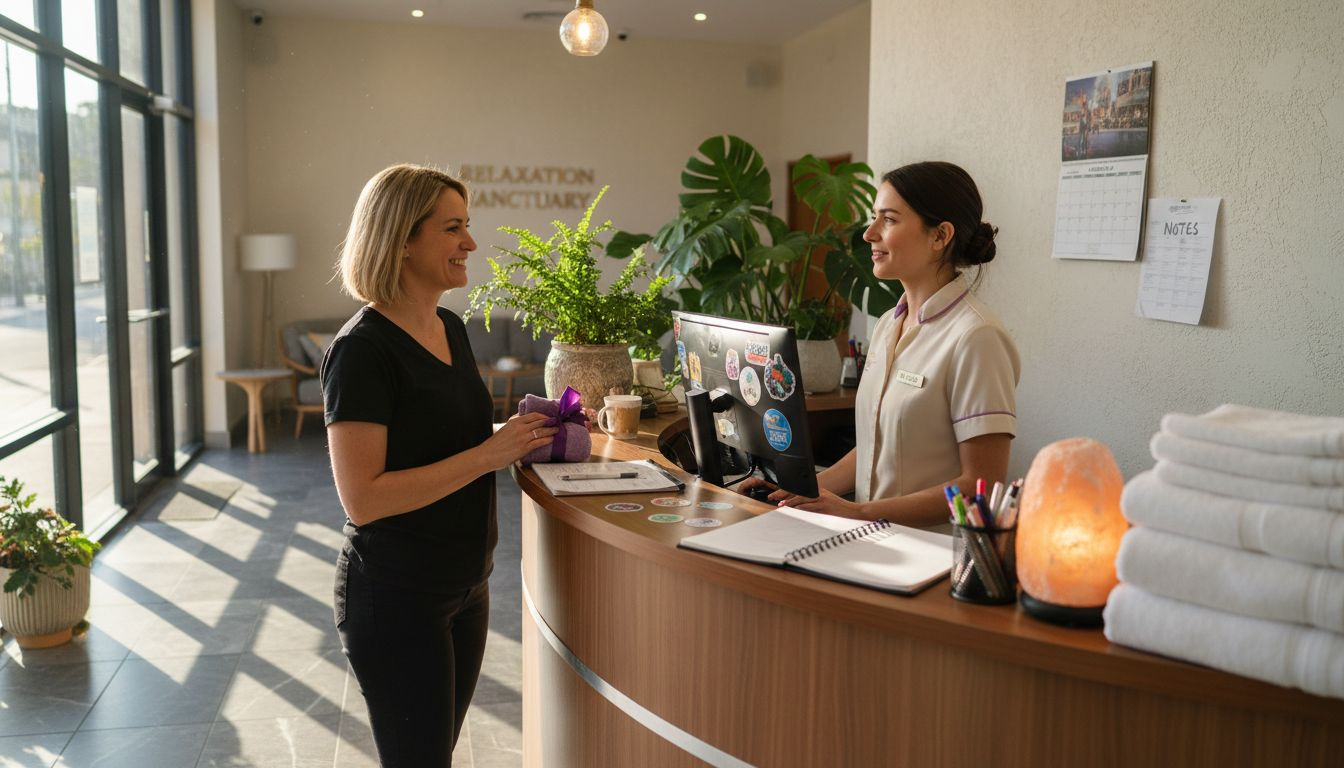
Managing appointments at your spa can quickly become overwhelming without the right tools. Staff get bogged down with manual scheduling, clients miss appointments, and time slots go unused. Offering a seamless booking experience is harder than it looks, especially when balancing therapist availability, special requests, and last-minute changes.
The good news is that with the right strategies and technology, you can make appointment scheduling smoother for everyone. Research shows that features like intuitive software interfaces, automated client reminders, and data-driven schedule adjustments can make a significant difference in client satisfaction and business efficiency.
Get ready to discover the most practical ways to simplify your spa’s appointment process. Each step is packed with actionable tips that help you save time, reduce stress, and deliver a professional experience your clients will love.
Table of Contents
- 1. Choose User-Friendly Scheduling Software
- 2. Automate Client Reminders For Fewer No-Shows
- 3. Enable Online Booking To Increase Convenience
- 4. Optimise Time Blocks To Maximise Productivity
- 5. Use Detailed Client Profiles For Personal Touch
- 6. Monitor And Adjust Your Schedule Regularly
Quick Summary
| Takeaway | Explanation |
|---|---|
| 1. Choose user-friendly software | Select scheduling software with an intuitive interface for smoother operations and fewer errors. |
| 2. Automate client reminders | Implement automated reminders for appointments to significantly reduce no-show rates and enhance client experience. |
| 3. Enable online booking | Offer online booking to provide clients with 24/7 access, increasing convenience and boosting bookings. |
| 4. Optimise time blocks | Structure time blocks realistically to enhance therapist scheduling and maintain service quality while reducing stress. |
| 5. Regularly review your schedule | Continually assess and adjust your scheduling based on performance metrics to improve efficiency and client satisfaction. |
1. Choose User-Friendly Scheduling Software
The software you choose to manage bookings sets the tone for your entire spa operation. Your team will interact with it dozens of times daily, so selecting a platform that feels intuitive and straightforward is non-negotiable for operational success.
When your scheduling system is easy to navigate, your staff spend less time wrestling with technology and more time focusing on clients. This means fewer errors in bookings, quicker responses to customer requests, and a team that actually enjoys using the system instead of dreading it.
Look for software that delivers these core features:
- Intuitive interface that requires minimal training for staff members
- Automated appointment reminders that reduce no-shows without manual effort
- Multi-location management if you operate more than one spa location
- Easy client profile access showing booking history and preferences instantly
- Mobile-friendly design so you can manage bookings from anywhere
According to research on leading spa software solutions, user-friendly scheduling platforms are critical because they directly streamline bookings and reduce your administrative burden whilst enhancing client satisfaction. The best systems feel so natural that your team starts using all their features without extensive training.
Test-drive any software before committing. Most platforms offer free trials, which give you real experience managing actual bookings rather than relying on marketing promises alone. Involve your team in this trial period—they’re the ones who’ll use it daily and can identify friction points you might miss.
A scheduling system your team actually enjoys using will pay for itself through reduced errors and faster booking times.
Consider how the software integrates with your existing tools. If you use a payment processor or accounting system, checking compatibility beforehand prevents headaches later. Good software should simplify your workflow, not create additional disconnected tasks.
Pro tip: Start with the free trial and assign one team member to explore all features thoroughly, then gather feedback from your entire staff before making the final decision.
2. Automate Client Reminders for Fewer No-Shows
No-shows are one of the most frustrating realities of running a spa. A client books an appointment, forgets about it, and suddenly you have a blocked time slot that could have generated revenue. Automated reminders solve this problem by keeping your bookings front and centre in clients’ minds.
When you automate reminders, you shift from manual follow-up work to a system that works whilst you sleep. Your scheduling software sends notifications at the right moments, typically 24 hours before and again the day of the appointment. This dual-reminder approach catches people who might otherwise forget.
The impact on your business is measurable. Most spas report that automated reminders reduce no-show rates by up to 30 percent or more. That means more revenue captured, better staff utilisation, and fewer frustrated stylists waiting for clients who never arrive.
Your reminders should deliver value, not annoyance. The best approach includes these elements:
- SMS and email options so clients receive reminders through their preferred channel
- Personalised messages that include the client’s name and specific service details
- Easy rescheduling links allowing clients to change appointments without calling
- Confirmation requests giving clients a chance to confirm they’ll attend
- Customisable timing so reminders arrive when clients are most likely to see them
When a client receives a reminder that includes their stylist’s name and the exact service they booked, they’re far more likely to show up. Generic messages feel impersonal and get ignored. Specificity makes reminders feel like genuine communication rather than spam.
Automated reminders don’t just reduce no-shows—they improve client experience by showing you value their time.
You can also use reminders strategically to upsell. A reminder mentioning “Your massage is booked for Friday. Don’t forget to ask about our new hot stone treatment” gently introduces additional services without being pushy.
The setup is straightforward with modern scheduling platforms. You configure your reminder templates once, then the system sends them automatically. No manual effort required after that initial setup.
Pro tip: Test different reminder timing and messaging to see what works best for your clientele, then track no-show rates weekly to measure improvement over time.
3. Enable Online Booking to Increase Convenience
Online booking removes friction from the reservation process. Clients can book your services whenever they want—midnight, early morning, or whilst commuting—without waiting for your team to answer the phone or check schedules manually.
This convenience translates directly into more bookings. When clients can book instantly, they book. When they have to call during business hours, some decide it’s too much hassle and book elsewhere instead. You’re removing barriers between wanting a service and completing the transaction.
Online booking also reduces your team’s phone time dramatically. Instead of fielding booking calls all day, your staff handle client questions, upsell services, and focus on actual spa work. This shift is productivity gold.
Here’s what effective online booking systems deliver:
- 24/7 availability so clients book outside your operating hours
- Real-time availability display showing exactly which time slots are open
- Staff preferences letting clients choose their preferred therapist
- Service selection with clear descriptions and pricing shown upfront
- Instant confirmation via email or SMS so clients have booking details immediately
- Flexible rescheduling allowing clients to change bookings without contacting you
Clients increasingly expect online booking. If you don’t offer it, they perceive your spa as outdated. Modern clients research businesses expecting to find booking options, and if yours isn’t available, they move to competitors who offer it.
The setup is simpler than most spa owners think. Modern scheduling platforms integrate booking directly into your website, creating a seamless client experience. No complicated configuration or technical knowledge required.
Online booking isn’t a nice-to-have anymore—it’s a basic expectation that influences whether clients choose your spa or a competitor.
You can also use your online booking system to gather valuable information. Clients indicate service preferences, arrival time preferences, and special requests when booking online. This data helps your team prepare better and personalise each client’s experience.
One additional benefit: online bookings create automatic records. You have timestamps, client contact details, and service history all captured without manual data entry. This reduces errors and makes following up with clients effortless.
Pro tip: Ensure your online booking system sends automatic confirmations and reminders, as this combination captures maximum no-show reduction and client satisfaction.
4. Optimise Time Blocks to Maximise Productivity
Time blocks are dedicated appointment slots designed to match how long each service actually takes. Rather than cramming clients in randomly, you structure your schedule around realistic service durations and therapist availability. This simple shift transforms your entire operation.
When you optimise time blocks properly, your spa runs like clockwork. Therapists finish appointments on schedule, transition smoothly between clients, and avoid the stress of running behind. Clients arrive knowing roughly when they’ll finish, creating predictability that builds trust.
Understanding your service times is the foundation. A 60-minute massage needs different scheduling than a 30-minute facial. Each service should have its own time block that includes the service itself plus transition time between clients.
Research on appointment scheduling optimisation shows that balancing appointment duration with resource availability reduces wait times and prevents scheduling conflicts. This directly improves customer satisfaction and prevents the chaos of overbooked therapists.
Your time blocks should reflect these realities:
- Service duration including actual treatment time plus setup and cleanup
- Therapist transitions allowing 10 to 15 minutes between back-to-back appointments
- Buffer time for running slightly over without disrupting the next client
- Lunch breaks scheduled in so therapists actually get proper rest
- Admin time allowing your team to process payments and handle client needs
- Capacity limits preventing double-booking or overbooking therapists
Manyspas make the mistake of scheduling too tightly. A therapist booked solid with zero transition time burns out quickly and delivers worse service. Building in realistic buffers actually improves service quality and client satisfaction.
Your scheduling software should enforce these time blocks automatically. Once configured, the system prevents booking appointments that violate your time-block rules. This removes human error from the equation entirely.
Properly optimised time blocks mean your schedule serves your business instead of your business scrambling to serve a chaotic schedule.
Different therapists might also need different time blocks. A newer therapist might need more transition time, whilst an experienced therapist works faster. Your system should accommodate these individual differences.
Track what’s actually working. After two weeks of a new schedule, review whether appointments are running on time or consistently running over. Adjust your time blocks based on real data rather than guessing.
Pro tip: Start with slightly longer time blocks than you think necessary, then reduce them gradually as you collect data on actual service times and client flow.
5. Use Detailed Client Profiles for Personal Touch
Detailed client profiles transform your spa from a transactional business into a relationship-based one. When you know your clients’ preferences, allergies, and history, you deliver experiences that feel personally tailored rather than generic.
Each client profile should capture information that matters. This goes far beyond their name and phone number. You’re building a complete picture that helps every team member serve them better.
Think about what happens when a client arrives. Your therapist glances at their profile and sees they prefer deep pressure, have a shellfish allergy, and always book with you for stress relief before work. That therapist can now deliver exactly what that client needs without asking basic questions repeatedly.
Spa management software allows you to customise services based on stored client data, letting you tailor treatments and send targeted offers that resonate with each person. This personalisation drives business success by making clients feel genuinely valued.
Your client profiles should track these details:
- Service preferences such as pressure level, temperature, and scent preferences
- Allergies and sensitivities to oils, fragrances, or specific ingredients
- Medical history including injuries or conditions affecting treatment
- Booking patterns showing when they typically visit and which services they favour
- Communication preferences indicating how they like to receive reminders and offers
- Special occasions noting birthdays or anniversaries for targeted promotions
- Therapist preferences recording which team members they connect with best
- Notes from previous visits capturing any feedback or requests they mentioned
This information creates consistency across appointments. Client visits therapist A one month and therapist B the next. Both know exactly how to serve them because the profile contains all relevant details.
Detailed profiles transform clients from repeat customers into loyal advocates who feel genuinely understood.
You can also use profile data strategically. If a client loves hot stone treatments, you can suggest a hot stone massage when they book a regular massage. If they always book on Fridays, you can offer them a Friday loyalty discount. Personalised marketing outperforms generic offers significantly.
Capturing this information happens naturally during the booking process and follow-up conversations. Train your team to add notes after each appointment about what worked well.
Pro tip: Create a simple checklist for your therapists to complete after each appointment, ensuring profile data stays current and actionable for future visits.
6. Monitor and Adjust Your Schedule Regularly
Your schedule isn’t set and forget. The best-designed systems require ongoing monitoring and adjustment based on real-world performance data. What works today might need tweaking next month as your business evolves.
Monitoring means tracking what’s actually happening versus what you planned. Are appointments running on time? Are certain time slots consistently filling up whilst others sit empty? Is your no-show rate improving or getting worse? These questions have answers in your scheduling data.
Scheduling system optimisation literature emphasises that monitoring key metrics and updating schedules accordingly improves system reliability, client satisfaction, and operational efficiency. This iterative adjustment approach transforms your schedule from static to dynamic.
Start by identifying the metrics that actually matter to your business:
- No-show rate tracking what percentage of booked clients fail to arrive
- Utilisation rate showing how fully booked your therapists actually are
- Wait times measuring how long clients spend waiting before appointments start
- Appointment overruns noting how often appointments exceed scheduled duration
- Client satisfaction scores gathered through post-appointment feedback
- Staff satisfaction asking your therapists whether the schedule feels sustainable
- Revenue per hour calculating whether your time blocks are financially optimal
- Therapist turnover watching whether unsustainable schedules cause good staff to leave
Review these metrics weekly or fortnightly. Look for patterns rather than single anomalies. If your no-show rate spikes on Mondays, investigate why. If certain therapists consistently overrun their time blocks, adjust their durations upward.
Your scheduling software should provide these reports automatically. If it doesn’t, switch platforms. You shouldn’t need to manually calculate metrics.
The best schedules evolve continuously based on data, not static assumptions made when you first set them up.
Adjustment might mean tweaking time blocks, shifting when you offer certain services, or reallocating therapists to different shifts. Small changes often yield surprising improvements in efficiency and satisfaction.
Involve your team in this process. Your therapists experience the schedule daily and can spot issues you might miss. They’ll also commit to changes they helped create.
Pro tip: Schedule a monthly “scheduling review” meeting where you present key metrics and discuss three specific adjustments to test in the following month.
The table below outlines the key strategies and considerations for optimising spa scheduling based on the article's recommendations.
| Aspect | Key Strategy | Expected Benefit |
|---|---|---|
| User-Friendly Scheduling Software | Select intuitive, adaptable software options with features like automated reminders and mobile access. | Enhanced staff efficiency and reduced administrative errors. |
| Client Reminder Automation | Implement automated SMS and email reminders tailored to client preferences. | Significantly lower no-show rates and improved client engagement. |
| Online Booking Availability | Enable 24/7 online self-service booking with real-time scheduling. | Increased booking rates and reduced operational bottlenecks. |
| Time Block Optimisation | Configure realistic appointment slots accounting for service duration and transition or buffer times. | Improved operational efficiency and therapist wellness. |
| Detailed Client Profiles | Maintain comprehensive client preference and history records accessible to staff. | Personalised client experiences and enhanced loyalty. |
| Continuous Schedule Adjustment | Regularly monitor scheduling data and refine organisational practices based on feedback. | Sustained operational improvement and client satisfaction. |
Streamline Your Spa Scheduling with Xolapp for Greater Success
Managing spa appointments efficiently is a common challenge highlighted in the article “6 Essential Spa Appointment Scheduling Tips for Success.” Key pain points such as reducing no-shows with automated reminders, optimising time blocks to improve therapist productivity, and creating detailed client profiles for personalised service are critical to running a thriving spa. Xolapp addresses all these issues by providing an all-in-one platform designed to simplify appointment scheduling, client management, and communication. With features like online booking available 24/7, SMS notifications, and a built-in AI receptionist, your team can focus less on administrative tasks and more on delivering exceptional client experiences.
Experience the power of a user-friendly system that embodies the principles from the article. Take control now by exploring how Xolapp’s comprehensive scheduling tools can reduce no-shows and improve your operational efficiency. Start your free trial and see firsthand how easy it is to create detailed client profiles, automate reminders, and optimise your schedule. Don’t wait until scheduling frustrations hold your spa back. Visit Xolapp today and unlock better booking management for your beauty or wellness business.
Frequently Asked Questions
How can I choose user-friendly scheduling software for my spa?
To select user-friendly scheduling software, look for platforms with an intuitive interface that requires minimal training for staff. Test different options through free trials to evaluate ease of use and gather feedback from your team before making a decision.
What should I automate to reduce no-shows?
Automate client reminders, sending notifications via SMS and email at strategic times before appointments. Implementing this can reduce no-show rates by up to 30%, improving revenue and client satisfaction.
How does online booking increase convenience for clients?
Online booking allows clients to schedule appointments at their convenience, any time of day or night, without needing to call your spa. This not only increases bookings but also reduces your team’s phone time significantly, allowing them to focus on providing services.
How do I optimise time blocks for scheduling spa appointments?
To optimise time blocks, set realistic appointment lengths that account for service duration and transition time. Adjust the blocks based on actual service times tracked over weeks to ensure a smooth and efficient operational flow.
Why are detailed client profiles important for my spa?
Detailed client profiles enable you to tailor services based on individual preferences and history, enhancing client satisfaction. Create comprehensive profiles that include service preferences, allergies, and past feedback, promoting personalised experiences with every visit.
How often should I monitor and adjust my appointment schedule?
Monitor your appointment schedule regularly, ideally every week or fortnight, to identify trends in no-show rates, wait times, and therapist utilisation. Adjust your scheduling practices based on these insights to continuously improve efficiency and client satisfaction.